
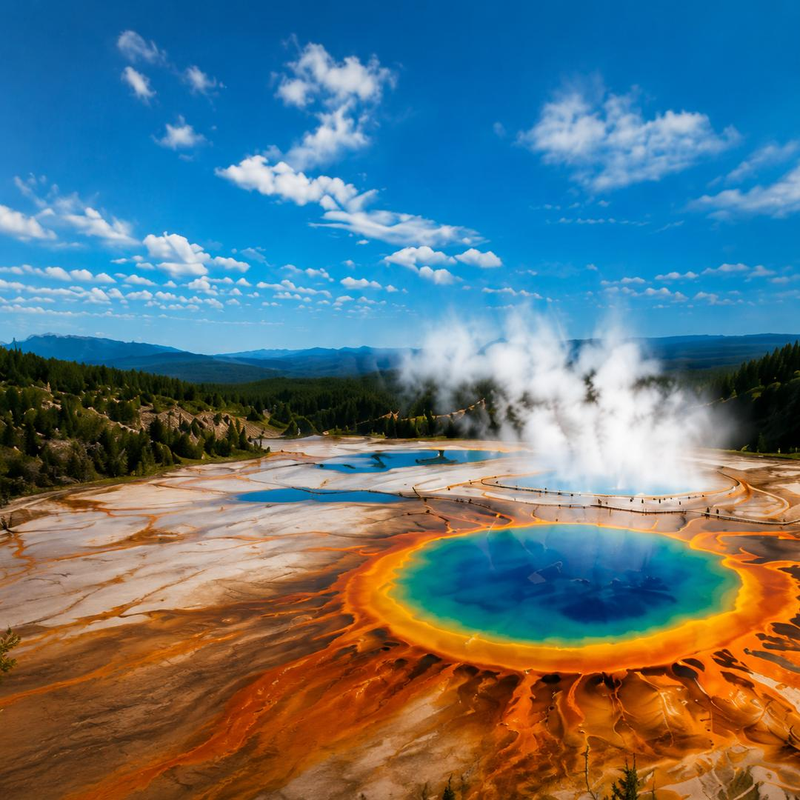
Yellowstone National Park
Yellowstone National Park
“This is one of the most geothermally active places on Earth — where wildlife and wild nature thrive.”
Location
Wyoming, USA
Recommended Stay
3–4 days
Best Time to Visit
May–Oct
Difficulty
Easy to Moderate
Must-See Highlights
Unmissable experiences in Yellowstone National Park
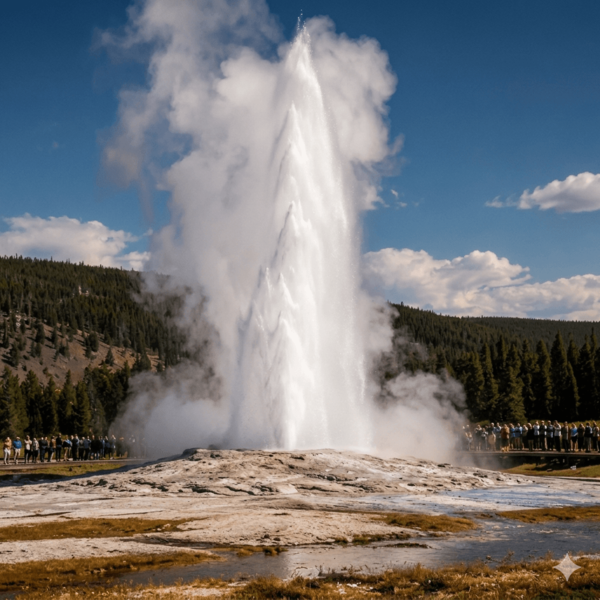
01Old Faithful
Old Faithful is located in the Upper Geyser Basin and is one of the most accessible geothermal attractions in Yellowstone, with large parking areas and a visitor center nearby. The geyser erupts roughly every 60–110 minutes, and eruption times are posted on-site, so visitors can plan around it without long waiting uncertainty. A short boardwalk loop connects multiple geothermal features, making it easy to explore while waiting for the eruption. The best experience is to arrive 20–40 minutes early to secure a viewing spot around the main platform, as crowds build quickly before each eruption. Expect powerful water jets reaching up to 30–50 meters, followed by steam that can drift across the viewing area depending on wind conditions.
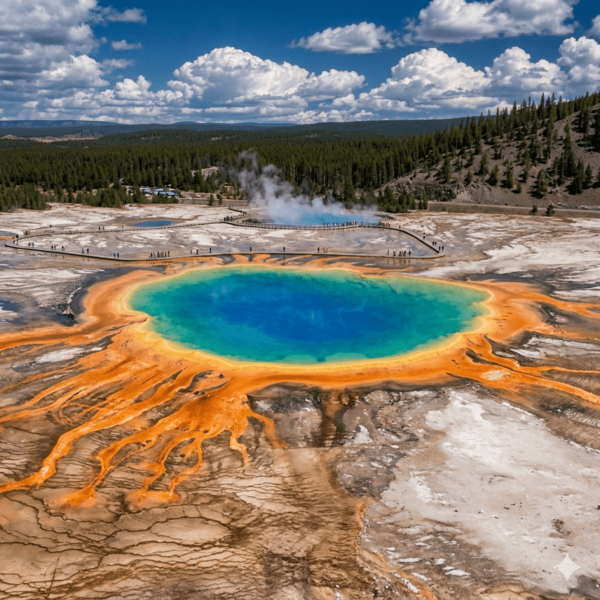
02Grand Prismatic Spring
Grand Prismatic Spring is located in Midway Geyser Basin, with a main boardwalk loop that passes close to the colorful thermal pools and steam vents. Parking is limited, and during peak hours visitors may need to wait for spots or use overflow parking along the access road. The best way to experience it is in two ways: the boardwalk for close-up steam and color textures, and the Fairy Falls overlook trail for a full aerial view of the rainbow-colored formation. Midday sunlight enhances the vivid orange, yellow, and blue tones created by thermophilic bacteria. On colder days or early mornings, heavy steam may partially obscure visibility, so timing is important.
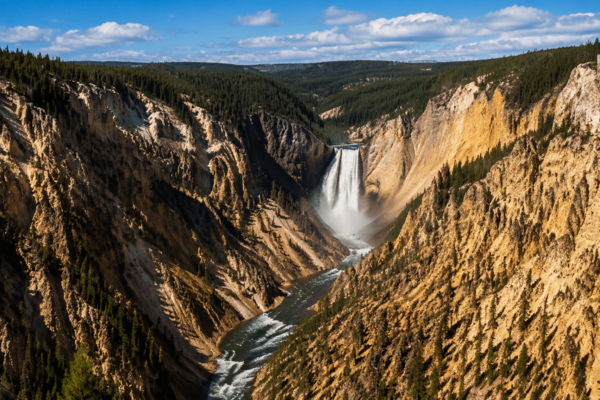
03Grand Canyon of Yellowstone
The Grand Canyon of Yellowstone stretches along the Yellowstone River and is best accessed via Canyon Village, where multiple parking areas and short trailheads connect to different viewpoints. The most famous overlooks include Artist Point and Upper/Lower Falls viewpoints, all reachable by short walks from parking lots. The canyon features dramatic yellow and orange rock walls formed by hydrothermal alteration, with the Lower Falls dropping nearly 94 meters into the gorge. Visitors can drive between viewpoints or hike short trails for different perspectives. Morning light is ideal for softer colors and fewer crowds, while midday enhances visibility of waterfall mist and canyon depth.
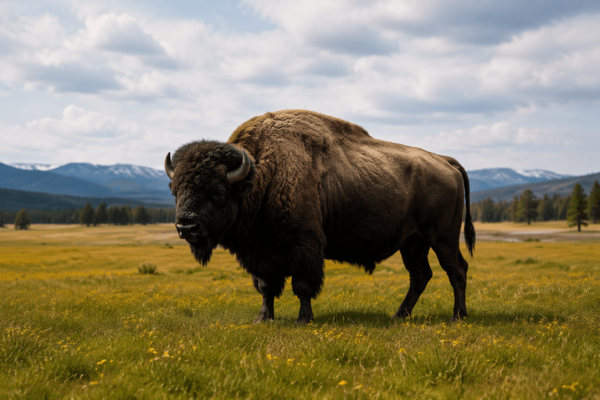
04Wildlife Watching
Lamar Valley is the most famous wildlife viewing area in Yellowstone and is best accessed by car via the Northeast Entrance road. Early morning (around sunrise) and late evening are peak times when bison, elk, wolves, and bears are most active. Visitors typically drive slowly along the valley road and pull over safely at designated turnout points when animals are spotted. A spotting scope or binoculars is highly recommended due to large distances between wildlife and roads. Weather can be cold even in summer mornings, so layered clothing is essential for extended roadside viewing sessions that may last several hours.
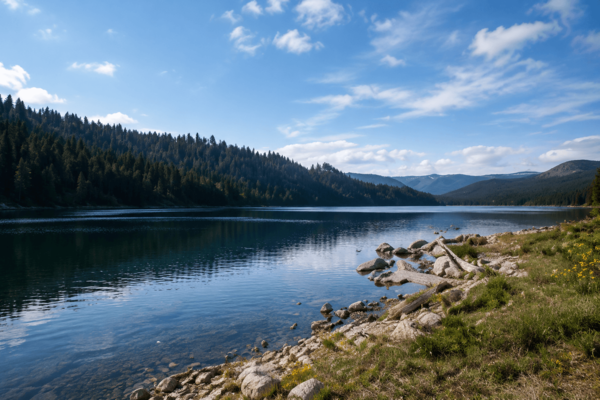
05Yellowstone Lake
Yellowstone Lake is located in the central-eastern part of the park and can be accessed via the South Entrance road or from Bridge Bay and Lake Village areas, both offering parking and shoreline access. As one of the largest high-elevation lakes in North America, it offers a calm and expansive landscape contrasting with the park’s geothermal zones. Visitors can explore short shoreline walks, marina areas, or simply stop at viewpoints along the road. Wind conditions can change quickly, creating dramatic shifts in water texture from mirror-like reflections to choppy waves. The lake area is especially peaceful during early morning when mist rises from the surface and crowds are minimal.
Why You Should Go
Geothermal Wonderland
Abundant Wildlife
Epic Outdoor Experience
Before You Go: What to Know
What to Wear
Layered clothing is essential — mornings can be cold even in summer, while afternoons are warm.
Weather
Weather changes rapidly; prepare for sun, rain, and wind in a single day.
Wildlife Safety
Keep distance from all wildlife, especially bison and bears — never approach.
Road Planning
The park is vast; driving times are long, so plan routes with buffer time.
Photography Tips
Geyser Shots
Arrive early and use wide-angle lens to capture eruption scale and steam motion.
Hot Spring Colors
Shoot from elevated viewpoints to capture full color gradients and patterns.
Wildlife Photography
Use telephoto lens, keep distance, and shoot during golden hours for best light.