
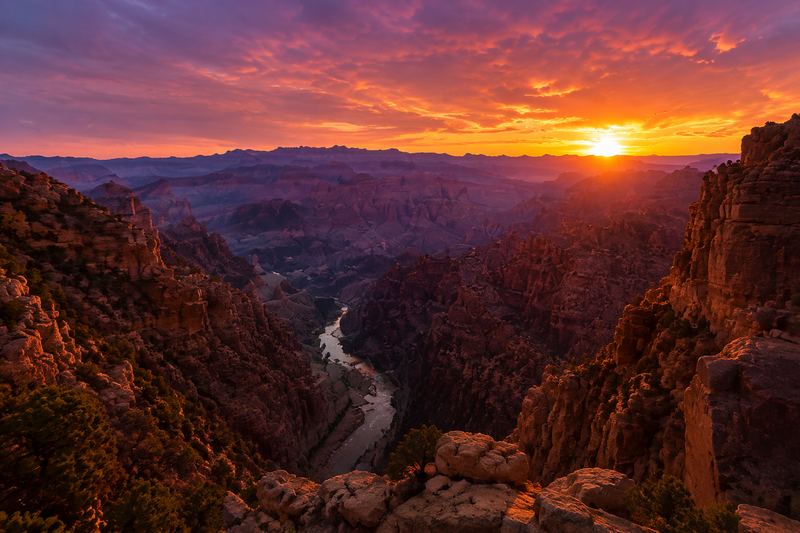
Grand Canyon National Park
Grand Canyon National Park
“A geological masterpiece carved by time itself.”
Location
Arizona, USA
Recommended Stay
2–3 days
Best Time to Visit
March–May / September–November
Difficulty
Easy to Moderate (varies by trail)
Must-See Highlights
Unmissable experiences in Grand Canyon National Park
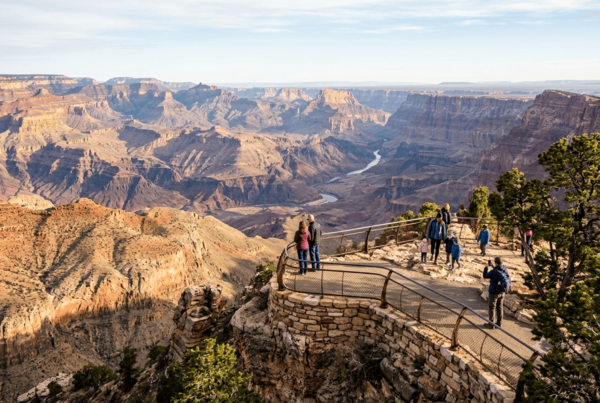
01South Rim
The South Rim is the main and most accessible gateway to Grand Canyon National Park, located near Grand Canyon Village with multiple parking areas and a well-developed shuttle bus system that connects major viewpoints. Most iconic overlooks such as Mather Point, Yavapai Point, and Hopi Point are accessible via shuttle or short walks. This area is ideal for first-time visitors because it provides the widest range of canyon viewpoints without requiring hiking. The best way to experience it is to follow the shuttle route in sequence, stopping at different overlooks to see how the canyon perspective changes with light and elevation. Sunrise and sunset are especially dramatic as shadows deepen across the layered rock formations.
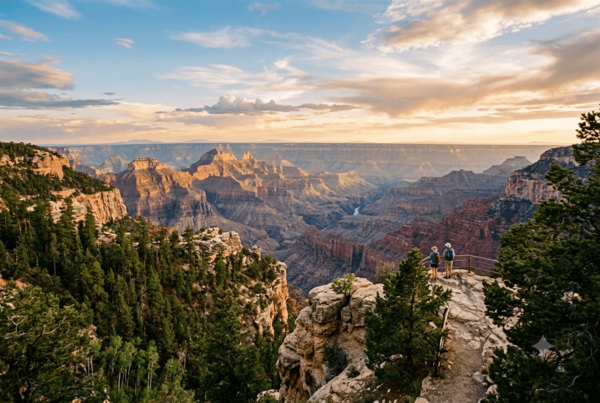
02North Rim
The North Rim is the less crowded and more remote side of the Grand Canyon, accessible by a longer drive compared to the South Rim and typically open only from mid-May to mid-October due to snowfall. It sits at a higher elevation, resulting in cooler temperatures and dense forest surroundings before reaching canyon viewpoints. The main overlooks such as Bright Angel Point are located close to the lodge area and require only short walks. Unlike the busy South Rim, the North Rim offers a quieter and more immersive natural experience with fewer facilities and visitors. It is best suited for travelers who prioritize solitude and extended scenic viewing over convenience.
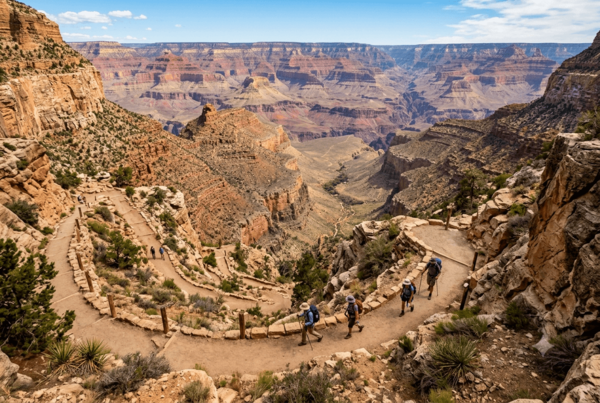
03Bright Angel Trail
Bright Angel Trail is one of the most famous hiking routes into the Grand Canyon, starting near Grand Canyon Village on the South Rim with clear signage and trailhead facilities. The trail descends steeply into the canyon with multiple rest points such as Mile-and-a-Half Resthouse and Indian Garden, making it possible to hike short sections without completing the full route. Most visitors hike only part of the trail to experience the canyon interior rather than attempting the full descent due to elevation and heat changes. Water stations are available at certain points during peak season, but conditions can be hot and physically demanding, especially in summer. Early morning starts are strongly recommended to avoid heat exposure and ensure a safe return ascent.
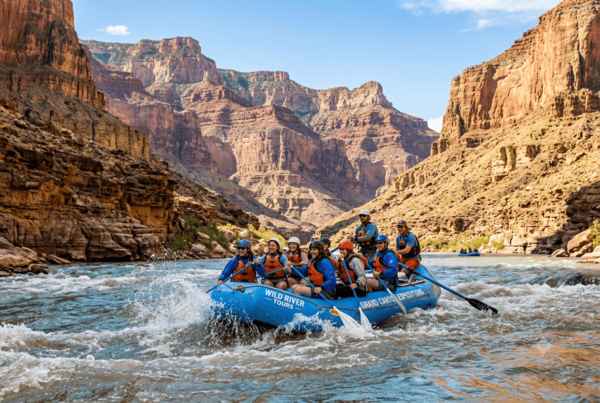
04Colorado River Rafting
Colorado River rafting offers a completely different perspective of the Grand Canyon from water level, with trips typically starting from points such as Lees Ferry upstream and requiring guided tour arrangements due to safety regulations. Depending on the itinerary, experiences can range from half-day smooth-water floats to multi-day whitewater expeditions through the canyon. This activity requires advance booking, physical preparation, and awareness of weather and water conditions, as river levels and rapids can vary seasonally. Unlike rim viewpoints, rafting places you directly inside the canyon’s geological layers, emphasizing scale, silence, and isolation. It is one of the most immersive but logistically complex ways to experience the park.
Why You Should Go
Geological Time Capsule
Dramatic Sunrise & Sunset Views
Outdoor Adventure Hub
Before You Go: What to Know
Clothing
Wear breathable layers; temperatures vary significantly between rim and canyon floor.
Weather
Summer can be extremely hot in inner canyon areas; winter may bring snow on the rims.
Transportation
Use shuttle buses on the South Rim to avoid parking congestion during peak seasons.
Safety
Stay on marked trails and avoid getting too close to cliff edges.
Photography Tips
Sunrise Photography (South Rim)
Arrive 30–60 minutes early to capture layered light changes across the canyon walls.
Wide-Angle Landscape Shots
Use a 16–35mm lens to emphasize depth, scale, and canyon textures.
Golden Hour Cliffs
Shoot during sunset for warm tones and strong shadow contrast across rock formations.