
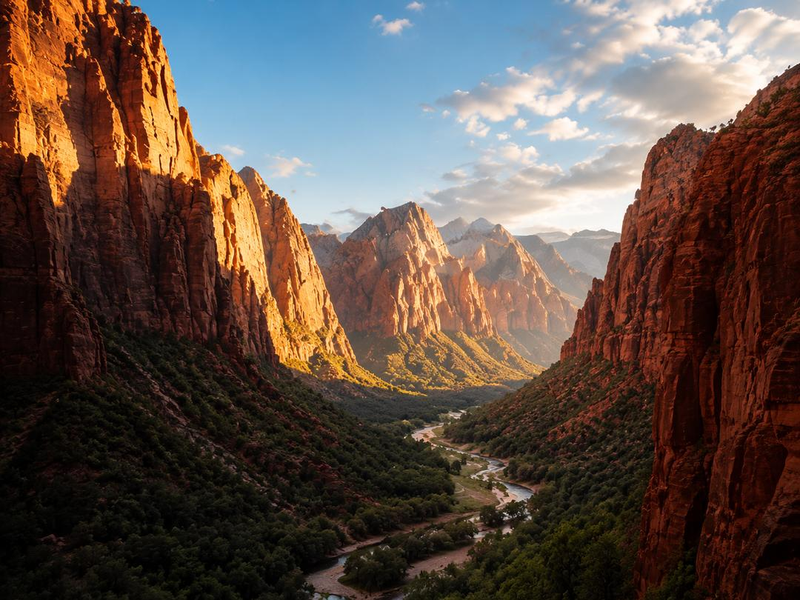
Zion National Park
Zion National Park
“A canyon sanctuary of red cliffs, rivers, and surreal natural beauty.”
Location
Utah, USA
Recommended Stay
2–3 days
Best Time to Visit
Mar–Nov
Difficulty
Easy to Moderate
Must-See Highlights
Unmissable experiences in Zion National Park
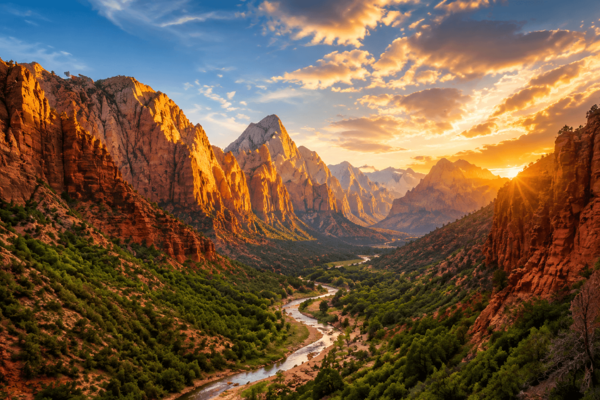
01Zion Canyon Scenic Drive
Zion Canyon Scenic Drive is the main artery of the park and is only accessible by mandatory shuttle buses during peak season (typically spring through fall). Private vehicles are restricted, so visitors must park at the Visitor Center or nearby Springdale town and transfer to the shuttle system. The shuttle runs multiple stops along the canyon, allowing flexible hop-on hop-off access to viewpoints and trailheads. The best experience is to ride the full route first, then return to selected stops for exploration. Early morning rides are less crowded and offer softer light on the towering sandstone cliffs, while midday reveals stronger color contrast across the canyon walls.
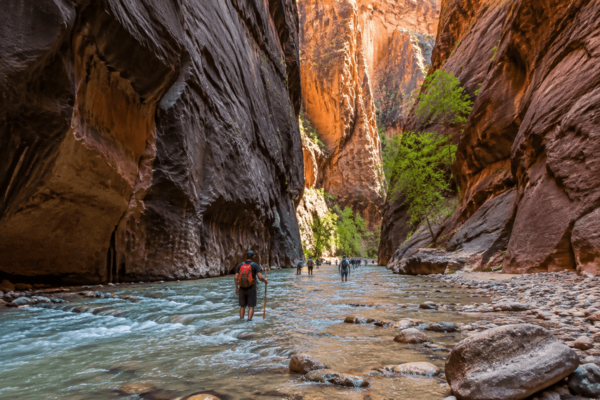
02The Narrows
The Narrows is accessed from the Temple of Sinawava shuttle stop, followed by a paved Riverside Walk trail (about 1 mile) that leads directly into the river entry point. From there, the hike continues inside the Virgin River, with no fixed trail—progress depends on water level and conditions. Waterproof gear and appropriate footwear are essential as hikers walk directly through the river between towering canyon walls that can rise hundreds of meters above. Flash flood risk is a key safety factor, and the trail may close after heavy rain. The best experience is in late spring or early fall when water levels are moderate and temperatures are manageable.
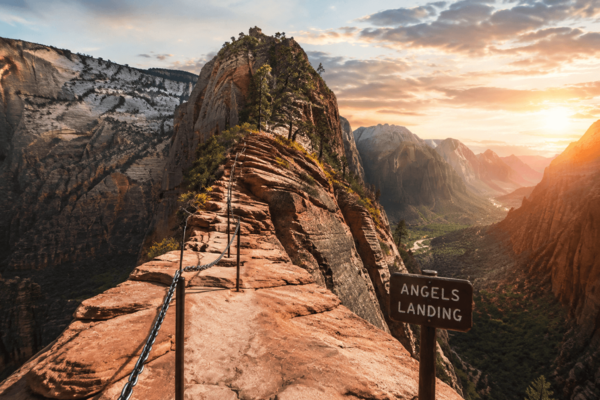
03Angels Landing
Angels Landing begins at the Grotto shuttle stop and is one of the most regulated hikes in Zion, requiring a permit during peak seasons due to its popularity and safety concerns. The trail starts with a steady ascent along switchbacks known as Walter’s Wiggles before reaching a narrow ridge section with steep drop-offs on both sides. Chains are installed along exposed sections to assist hikers, but the final stretch requires careful footing and comfort with heights. The round-trip hike typically takes 3–5 hours depending on pace and crowd conditions. Early morning starts are strongly recommended to avoid heat and congestion on narrow ridge sections.
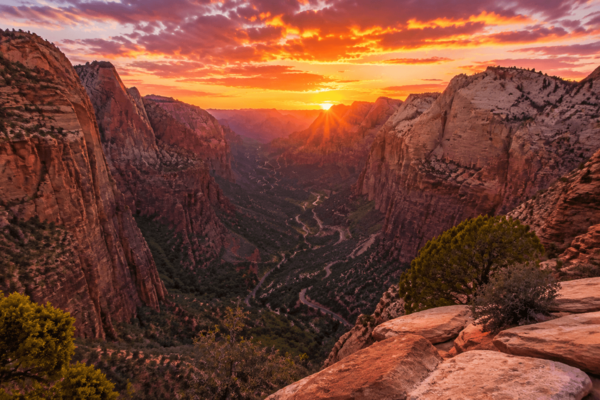
04Sunset at Canyon Overlook
Canyon Overlook Trail is one of the most accessible scenic viewpoints in Zion, located just off the Zion-Mount Carmel Highway with a small parking lot that fills quickly, especially near sunset. The short 1-mile round-trip trail includes mild elevation gain and some exposed sections but is manageable for most visitors. The final viewpoint overlooks Pine Creek Canyon and the main Zion Valley, making it a prime sunset location where sandstone layers shift into deep orange and red tones. Arriving 30–45 minutes before sunset is recommended to secure viewing space and parking.
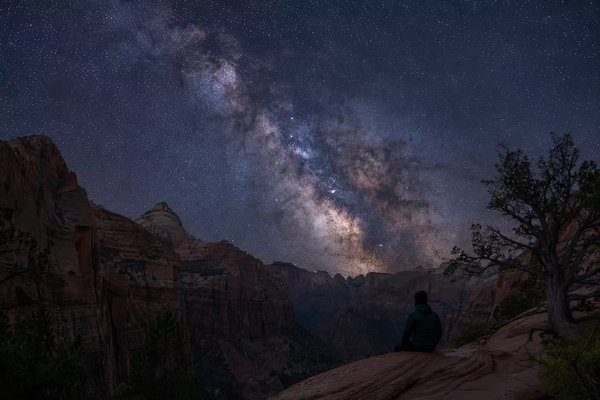
05Stargazing
Zion National Park is designated as a Dark Sky Park, making it one of the best locations in the U.S. for stargazing and Milky Way photography. The best viewing areas include open spaces near the Visitor Center, Kolob Terrace Road, and pullouts along Zion Canyon Scenic Drive after dark. Minimal light pollution allows the Milky Way to be clearly visible on cloudless nights, especially during summer months. No hiking is required—simply stay in designated safe areas after sunset. Clear desert air and dry conditions often create sharp, high-contrast night sky visibility, making long exposure photography highly effective.
Why You Should Go
Red Rock Canyon Walls
World-Class Hiking Trails
Stunning Desert Light
Travel Tips
What to Wear
Lightweight hiking clothes, breathable layers, sturdy shoes, sun protection, and a hat are essential. Temperatures can change quickly between sun-exposed cliffs and shaded canyons.
Weather
Spring and fall offer the best hiking conditions. Summers can be extremely hot, so early morning hikes are strongly recommended.
Reservations
Parking and shuttle access may be required during peak seasons. Arrive early to avoid congestion at popular trailheads.
Safety
Stay on marked trails, avoid cliff edges, and carry enough water. Flash floods and heat exposure are key risks in canyon areas.
Photography Tips
Sunrise Shots
Arrive 30–60 minutes early and use wide-angle lenses to capture shifting light across canyon walls.
Long Exposure
Use ND filters to smooth motion in water and clouds for a cinematic desert feel.
Composition
Use canyon curves and leading lines to create depth and emphasize scale.